
Genuine curiosity will always beat performative intellectualism
A curious mind has nothing to prove.

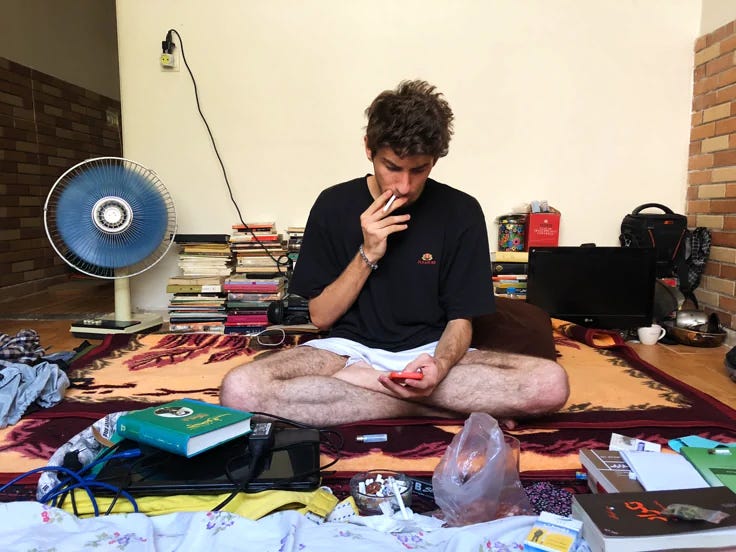
I think one of the strangest things about growing older is realizing that intelligence has its own fashion trends. There are seasons where everyone suddenly reads the same books, repeats the same opinions, quotes the same people, and somehow every conversation starts sounding like it came from one shared script. I used to think this meant everyone was learning together. Now I think many people are just trying to be seen learning.
I don’t even mean this in a judgmental way. I catch myself doing little versions of it too. You hear someone mention an author you’ve never read, so you make a mental note to casually bring that name up later. You finish half a podcast and suddenly feel qualified to speak with certainty. You save essays you never actually read, hoping the collection itself says something about you. There is a strange comfort in looking like someone who knows things.
On the other hand, curiosity is different; it feels different.
Curiosity has never cared about appearances. It asks questions that don’t sound impressive. It stays with topics nobody else finds exciting. It spends an hour searching for an answer that never becomes a social media post. It forgets time. It wanders into rabbit holes without wondering whether anyone will clap at the end.
I have always loved people who become completely absorbed by something. Someone explaining why octopuses solve puzzles. Someone talking about old train stations, old buildings. Someone spending twenty minutes telling me why a movie soundtrack or the colours changed the entire story. Their excitement is something else. It isn’t performing. It simply exists, taking up all their spaces.
Those conversations leave me feeling awake.
Then there are conversations where every sentence feels bland and carefully placed, enough to make them look interesting. Every reference lands with perfect timing. Every opinion sounds polished before it is even spoken. You start feeling less like you’re talking to a person and more like you’re attending a presentation. Somewhere beneath all the cleverness, you begin searching for them. The actual person. Sometimes they are there. Sometimes they disappear behind the performance.
I wonder how often people mistake vocabulary for depth.
There is a difference between collecting ideas and living with them. One fills a shelf. The other changes the way you notice the world. Someone can quote ten philosophers and still panic when asked what they actually believe. Someone else might never mention a single famous name and still say one sentence that stays in your head for weeks.
That difference fascinates me.
I think genuine curiosity is comfortable admitting ignorance. It says, “I don’t know,” without feeling embarrassed of not knowing. Performative intellectualism has a harder job. It has to keep proving itself. Every conversation becomes another test. Every disagreement feels personal.
That sounds exhausting.
Maybe that’s why curious people seem so effortlessly cool and calmer. They don’t carry the pressure of always appearing informed. They can laugh at their own mistakes. They can change their minds without treating it like defeat. They don’t build their identity around being the smartest person in the room. They just enjoy finding something they didn’t know yesterday.
I don’t think curiosity makes someone look intelligent all the time. Sometimes it makes you look clueless. You ask basic questions. You interrupt yourself. You admit confusion. You take the risk of sounding uninformed. There is something quietly brave about that. Pride usually wants polished answers. Curiosity wants honest ones.
I notice this whenever I meet someone who genuinely loves learning. They rarely rush toward conclusions. They stay with uncertainty longer than most people do. They keep asking one more question even after everyone else seems satisfied. There is patience in the way they think. Their confidence comes from knowing that every answer opens another door.
People chasing appearances often stop at the first answer that sounds convincing. Curiosity keeps walking.
I think social media has made this difference even easier to miss. Knowledge has become another aesthetic. Books become decorations before they become companions. Quotes travel farther than reflection. Reading lists grow faster than understanding. There is nothing wrong with sharing what you’re learning. I love seeing people excited about ideas. The strange part begins when looking thoughtful becomes more important than actually thinking.
You can almost feel the shift.
Someone recommends a book. Another person buys it immediately. A photo appears online. Weeks pass. The pages remain untouched. The image already served its purpose. Meanwhile another person quietly borrows the same book from a library, fills the margins with notes, disagrees with half of it, and never mentions reading it to anyone. Guess which person actually changed.
One thing I admire is how curious people let themselves be surprised. They aren’t searching for information that confirms what they already think. They enjoy finding out they were wrong. There is freedom in that. Every unexpected answer becomes another invitation instead of another threat.
Performance doesn’t have much room for surprise. It already decided how it wants to be perceived. New information can interrupt the role. Genuine curiosity welcomes the interruption.
I think this also changes friendships. You remember the people who ask questions and actually wait for your answer. They don’t listen for a chance to speak. They listen because your experience is genuinely interesting to them. Those conversations never feel rushed. You leave feeling understood instead of evaluated.
The opposite leaves a different feeling. You walk away remembering facts, references, opinions, and impressive sentences. Somehow you still know almost nothing about the person who said them.
That has always felt strange to me.
I hope I never lose the part of myself that follows random questions for no reason. The part that opens five tabs after hearing one unfamiliar word. The part that spends an evening wondering how something works even if nobody ever hears the answer. Those moments have given me far more than the times I tried to sound clever.
Maybe real learning has always been quieter than we imagine.
Years from now, I doubt anyone will remember who sounded the smartest in every conversation. People remember curiosity in different ways. They remember the friend whose eyes lit up while explaining something they loved. They remember the person who wasn’t afraid to ask another question. They remember someone who made learning feel welcoming instead of competitive.
That version of intelligence feels human.
And I think that’s the whole point. Genuine curiosity isn’t trying to win a room. It is trying to understand the world a little better today than it did yesterday. Somehow that keeps making people wiser without them chasing the title. Performance can impress a crowd for an evening. Curiosity keeps shaping a person for a lifetime, even when nobody is watching.
If this essay stayed with you, and you’d like to support the time, thought, and coffee that go into writing pieces like this, you can buy me a coffee below. Every contribution helps me keep this little corner of the internet alive. Thank you for reading.

What’s interesting is that performance and curiosity aren’t opposites so much as they’re running on different reward schedules one wants the hit now, the other’s fine waiting years for a payoff nobody’s tracking. Makes sense why the performing version burns out faster, there’s no compounding interest on borrowed opinions.
Performance always needs somewhere to land. It needs some kind of punchline, or takeaway, or applause. The way I see it, curiosity has no exit strategy. It's just fine wandering off with no conclusion in sight and no audience. That's probably the real tell, not what someone says in company but what they still do when there's no one listening.